Tiếng Việt
 中文 (中国)
Wastewater containing heavy metals, oil, solvents or concentrated acids cannot be treated together with ordinary wastewater. The difficult part usually lies in segregating the streams, controlling the chemicals and managing the sludge generated, rather than in any particular piece of equipment. NGO International Co., Ltd (NGO International), which specialises in industrial wastewater treatment and water supply, approaches this type of wastewater with integrated modules pre-assembled as units. This article presents that approach through a hazardous wastewater treatment module project that NGO has delivered.
Overview of treating wastewater with hazardous components
In practice, “hazardous wastewater” is a general term for wastewater containing toxic components: heavy metals, oil and emulsions, solvents, concentrated acids or alkalis, and chemicals from electroplating, mechanical engineering, chemical manufacturing and electronics. Each group of substances needs its own treatment method, and the biggest difficulties arise when different streams are mixed in one tank.
This type of wastewater is often generated in batches rather than continuously, so a continuously running system is prone to underloading or shock loads. Its composition also changes from one production batch to the next, which is hard to predict from average data. And the sludge left after treatment may be classified as hazardous waste depending on the analysis results, in which case it must be stored and handed over in accordance with regulations.
Therefore, before choosing a technology, it is necessary to analyse the composition of each stream and determine which streams can be segregated, the volume of each batch, the effluent requirements and the available space. Segregating the concentrated stream usually makes the remaining wastewater much simpler to treat.
NGO International’s capabilities in treating wastewater with hazardous components
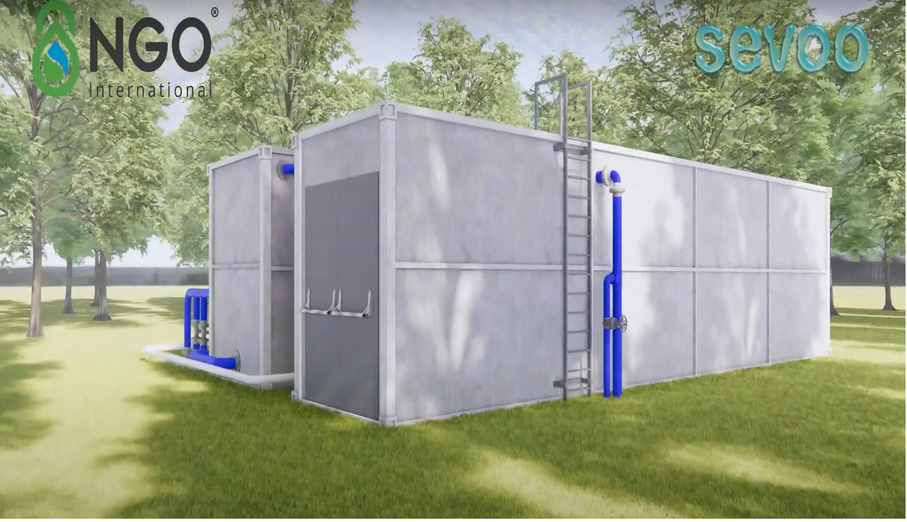
NGO International supplies treatment systems as integrated modules: reaction tanks, coagulation units, pumps, pipework and control panels are pre-assembled as units before being delivered to the facility. This is one of the construction-free wastewater treatment options the company offers businesses, and it can be installed partly or fully without interrupting production.
Before proposing a technology, NGO engineers survey the site and review the facility’s actual operating data. The scope covers design, equipment supply, installation, commissioning and operation consulting once the system is in service. For metal-bearing wastewater from electroplating and electronic components, see also our wastewater reuse station for electronic component plating.
Featured projects by NGO International
The specific type of wastewater and the name of the facility are not disclosed for confidentiality reasons; the section below describes the structure and operation of the module through three segments of the video at the top of this article. NGO’s other projects are compiled on the Projects page.
Integrated hazardous wastewater treatment module
| Type | Integrated module |
|---|---|
| Application | Wastewater with hazardous components |
| Structure | Reaction tanks, skid-mounted coagulation unit, control panel |
| Effluent testing | On-site rapid test kit |
- The challenge
Wastewater with hazardous components has to be treated separately, with chemical dosing and pH tightly controlled at each step before discharge.
- NGO’s solution
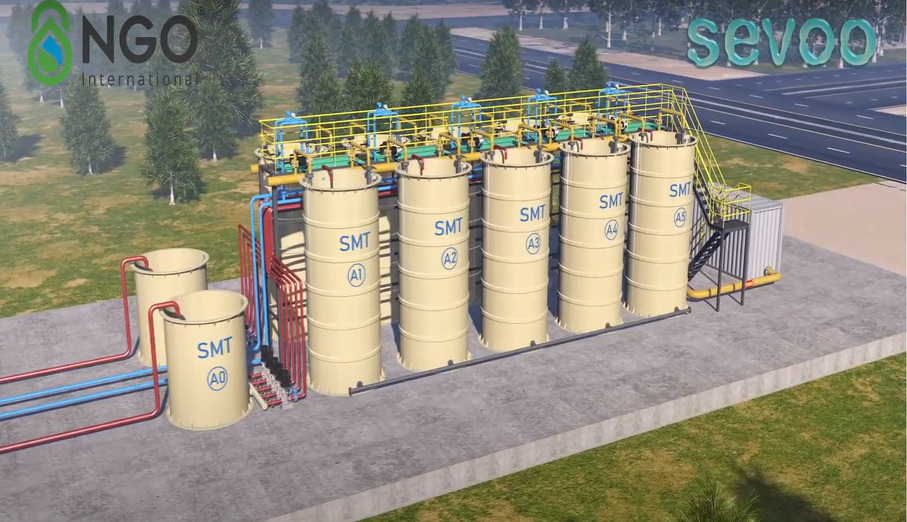
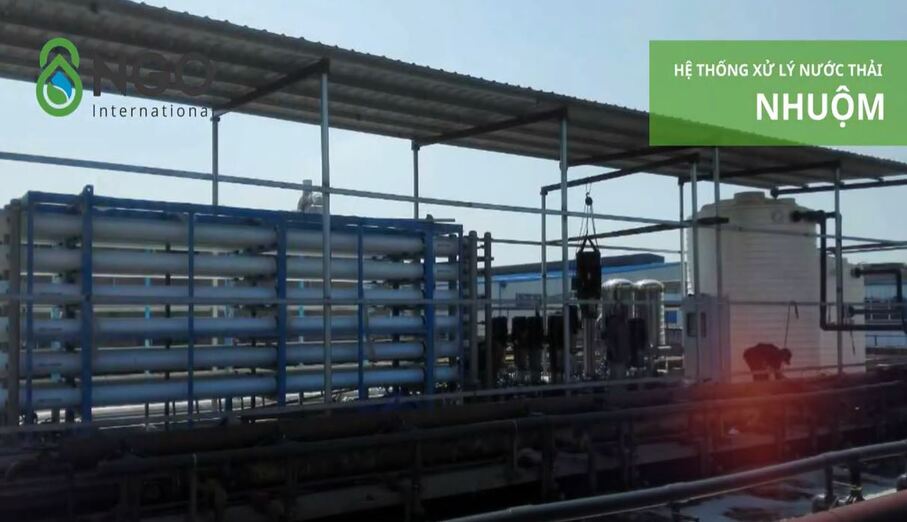
The system comprises reaction tanks and coagulation units pre-assembled on a skid frame, pumps and pipework, plus a centralised electrical control panel with a display screen and status lights for each piece of equipment. The configuration is selected according to the characteristics of the facility’s wastewater.
- NGO’s role
NGO International delivered the module from assembling the station structure to operating the system and checking effluent quality.
- Results / value delivered
The module has been put into operation. Effluent quality is checked quickly with a colorimetric test kit right on site, which makes day-to-day monitoring easy alongside periodic laboratory analysis.
Wastewater treatment technologies commonly used for wastewater with hazardous components
The first step is almost always stream segregation and pH adjustment. For heavy metals, the common approach is to raise the pH to the hydroxide precipitation range, followed by coagulation, flocculation and settling; a pre-assembled skid-mounted coagulation–flocculation unit is the type of equipment typically used for this step. Streams containing hexavalent chromium must first be reduced to trivalent chromium, and streams containing cyanide need separate oxidation; how these streams are treated in the plating industry is covered on our solutions for the electroplating and electronic components industry page.
Poorly biodegradable organics such as solvents or aromatic compounds usually require advanced oxidation (Fenton, ozone) or activated carbon adsorption. Wastewater contaminated with oil and emulsions needs emulsion breaking and flotation first. A polishing stage using filtration, ion exchange or membrane filtration brings trace metal concentrations down to low levels.
Sludge from these stages needs to be managed separately: pressed to reduce its volume, analysed for classification, then handed over to a company holding an appropriate permit. This is often a significant cost item, so it must be accounted for from the design stage.
Treating wastewater with hazardous components in Vietnam
Facilities generating wastewater with hazardous components have two options: treat it on site until it meets the discharge regulation or the connection limits, or collect it and hand it over to a company licensed to treat hazardous waste. The choice depends on the volume generated, the distance to the treatment company, transport costs and the regulations of the locality where the plant is located.
For plants in an industrial park, the water leaving the module must also meet the intake limits of the park’s centralised treatment plant, which usually set separate limits for heavy metals. When generation is steady, an on-site treatment module is usually weighed against the long-term cost of hand-over. NGO’s technical team works from two offices in Hanoi and Ho Chi Minh City, so we can survey facilities in both Northern and Southern Vietnam.
NGO International undertakes surveys and deploys modules for treating wastewater with hazardous components for facilities in the localities below, which are home to many mechanical engineering, electronics and chemical plants.
Where we work: hazardous wastewater treatment
Northern Vietnam: Bac Ninh, Vinh Phuc (now part of Phu Tho), Hai Duong (now part of Hai Phong), Hai Phong
Southern Vietnam: Ho Chi Minh City, Ba Ria – Vung Tau (now part of Ho Chi Minh City)
Why choose a provider with hands-on experience?
Treating hazardous wastewater incorrectly not only leads to non-compliant effluent but also creates safety risks for operators. For this type of wastewater, a credible quotation must come with analysis results for each stream, a chemical safety and ventilation plan, and a plan for the sludge.
Experienced contractors usually ask for water samples and time for testing before proposing a process diagram, rather than quoting on capacity alone. It is also worth asking how they deal with changes in wastewater composition between production batches.
Frequently asked questions
Yes, depending on its composition. Many streams can be treated on site with an integrated module to meet the discharge regulation; the sludge generated must be classified and handed over in accordance with regulations.
NGO International has delivered an integrated hazardous wastewater treatment module comprising reaction tanks, a skid-mounted coagulation unit and a centralised control panel, together with on-site effluent quality testing.
It typically includes reaction tanks, a coagulation unit, dosing and transfer pumps, pipework and an electrical control panel. The specific configuration depends on the wastewater characteristics.
It is based on the wastewater volume per batch or per day, the retention time needed for the reactions and the effluent requirements. For batch discharges, the reaction tank volume matters more than the average capacity.
In Northern Vietnam, NGO undertakes surveys and module installation in Bac Ninh, Vinh Phuc (now part of Phu Tho), Hai Duong and Hai Phong; in Southern Vietnam, in Ho Chi Minh City and Ba Ria – Vung Tau. The modules are pre-assembled as units, so they can be transported to facilities far away.
The sludge is pressed to reduce its volume, analysed for classification and handed over to a company holding an appropriate permit if it falls into the hazardous waste category.
Segregation is advisable when streams need different treatment methods, for example a stream containing hexavalent chromium must be reduced first and a stream containing cyanide must be oxidised separately. Mixing them makes the reactions harder to control and uses more chemicals.
Conclusion
Wastewater with hazardous components has to be treated stream by stream, with the sludge generated taken into account. Integrated modules allow fast deployment with little civil construction, but they are only effective when the configuration is selected from real wastewater data and there is a clear chemical safety procedure.
NGO International has delivered an integrated hazardous wastewater treatment module, from assembling the station structure and operation to effluent quality testing. For facilities considering on-site treatment, the first step should be sampling each waste stream; NGO can support the survey right at this stage.
Contact NGO International