Tiếng Việt
 中文 (中国)


Is your wastewater treatment system taking up too much space? Are operating costs, chemicals and labour eating into your profits? And most importantly, can you be truly confident that the treated water quality is always stable and meets increasingly strict discharge standards?
These are the concerns of hundreds of businesses that NGO International has worked with over almost 10 years. Domestic wastewater, although it may seem “benign”, contains as much as 52% organic matter and countless pathogenic microorganisms, and can become a legal and reputational risk at any time if it is not thoroughly treated. MBR (membrane bioreactor) technology is the decisive answer, turning the challenge of wastewater treatment into a lasting competitive advantage for your business.
I. How does A-standard domestic wastewater treatment with MBR (membrane bioreactor) technology differ from other domestic wastewater treatment technologies?
Domestic wastewater contains many kinds of impurities: 52% organic matter, 48% inorganic matter and a large number of microorganisms in the form of pathogenic viruses and bacteria. Domestic wastewater usually has a fairly high nutrient content (nitrogen, phosphorus), so the most common treatment option is still biological treatment.
Basically, MBR technology is still based on the biological treatment principle of activated sludge, but with an added hollow-fibre membrane module whose pore size is extremely small (micrometre scale). This breakthrough combination delivers clear advantages over conventional technologies.
Comparison table: conventional technology vs MBR technology
| Comparison criteria | Conventional activated sludge technology | MBR technology (membrane bioreactor) |
| Biological settling tank | Required, takes up a large area, and sludge is easily carried out with the effluent. | Eliminated entirely; the MBR membrane replaces the function of the settling tank. |
| Disinfection tank | Required; chemicals (chlorine) must be used to kill coliforms. | Not needed; the membrane retains all bacteria and viruses. |
| Construction footprint | Large and bulky. | Saves more than 50% of the area; compact design in 1-2 main tanks. |
| Water quality | Unstable; depends on the settling ability of the sludge. | Always stably meets Standard A, regardless of sludge settleability. |
| Biomass concentration | Low (2,500 – 3,500 mg/L). | Very high (8,000 – 15,000 mg/L), improving treatment efficiency. |
| Upgradability | Difficult; new tanks must be built. | Easy; just add more MBR membrane modules. |
II. Are there different types of MBR membranes? Which one is best to use?
There are countless types of MBR membranes on the market, but not all membranes are the same. With experience from hundreds of projects, NGO International advises you to pay special attention to the following 3 factors so that you do not “throw money out of the window”:
- Operating pressure (TMP): This is the most important indicator of membrane material quality. A high-quality membrane has an extremely low operating pressure, which saves electricity for the suction pump and extends service life.
- Cleaning frequency and chemicals: A poor-quality MBR membrane clogs very quickly and has to be cleaned constantly (weekly) with high chemical concentrations. This is both costly to operate and inconvenient for the operator.
- Membrane cleaning technology: Older technology requires lifting the whole membrane module out of the tank for cleaning – an extremely complicated and labour-intensive process. A modern MBR membrane must allow clean-in-place (CIP) cleaning, which is automatic and easy.
III. How does NGO design a domestic wastewater treatment system using MBR technology?
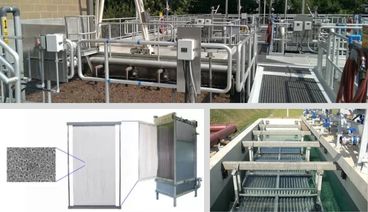
The design is extremely compact: the treatment system consists of only 1-2 main treatment tanks, which can be built above ground, below ground, or partly above and partly below ground. The total space needed to build the system is always smaller than the total discharge capacity per day, which saves a great deal of land area and construction cost.
- Description of the treatment system
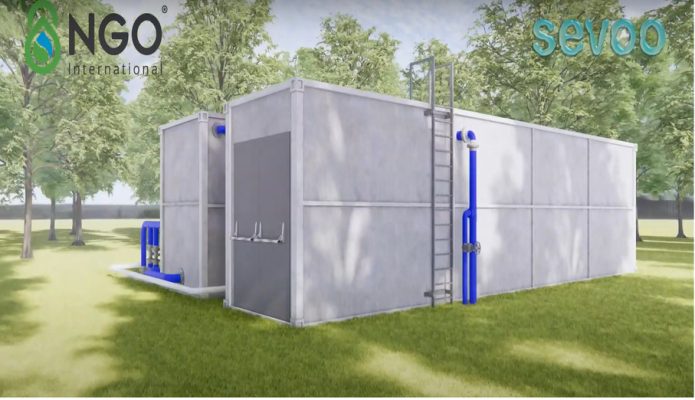
TREATMENT STEPS

Pre-treatment
- Pre-treatment is very important because it removes coarse solids so that they do not clog pumps and pipelines. Next comes a grease removal chamber, so that grease does not interfere with the beneficial biological process in the treatment plant. A grease trap is especially necessary for canteen wastewater.

Equalisation tank
- Because of how the plant operates, water is used heavily during the day and little at night, so the wastewater flow fluctuates constantly and by a large margin. An equalisation tank for the incoming wastewater is therefore needed to prevent shock loads on the biological treatment system.

Anoxic tank
- Denitrification (NO3 removal): anoxic microorganisms use nitrate (NO-3) for respiration instead of oxygen, so the nitrate-containing water must be recirculated back. To improve treatment efficiency, a submersible mixer is also installed in the tank. This tank can be omitted if the client does not have enough space or area for the treatment system.

Aerobic & MBR tank
- This is the central treatment compartment of the system before the wastewater is discharged. The very high concentration of microorganisms, attached as a film on the surface, completely removes pollutants such as ammonium NH4, part of the BOD, and nitrate. The membrane also filters back any components that could not be treated in time because of overload, returning them through the recirculation pump so that the wastewater is treated thoroughly.
- A characteristic of wastewater is that about 48% is inorganic matter that is not biodegradable, and not every organic compound is broken down by microorganisms either. The membrane therefore plays a vital role in filtering out most of these substances together with the sludge, including coliforms, ensuring that the water stably meets Standard A or better, without any additional disinfection chemicals to treat coliforms.

Sludge holding tank
- Holds the excess sludge produced during treatment and partially dewaters it before it is transported away for treatment as solid or liquid waste.
IV. Does NGO use any different MBR technology?
Yes. NGO uses the MBR-X membrane, which has a 3D material structure and a water distribution structure with 6 ports (instead of 1 port like most membranes on the market today). Its transmembrane pressure is exceptionally low, arguably the lowest among the membrane technologies on the market today; membrane cleaning is very infrequent (about once a month) with only a 0.5% NaClO solution, and the membrane is cleaned right inside the treatment tank, which is easy and convenient for the operator. This technology holds 7 patents and has been applied in more than 300 projects worldwide.
V. Is it expensive to maintain an A-standard domestic wastewater treatment system?
A business spends less than 2,000 VND/m3 to maintain an A-standard domestic wastewater treatment system with MBR technology.
VI. What water quality does NGO commit to?
NGO is able to commit to compliant water quality for businesses thanks to technology inherited from a strategic partnership with the manufacturer and experience accumulated from the hundreds of MBR projects already delivered. We will support the business in monitoring water quality daily, transparently and independently, to ensure the quality is as committed.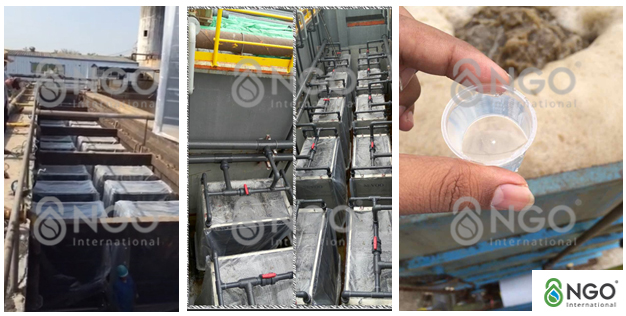
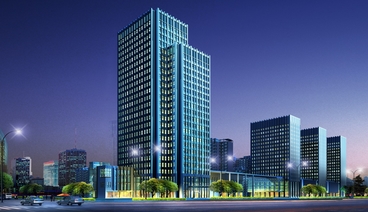
- Project: A modern office building in central Hanoi, with a wastewater flow of 150 m³/day, under pressure to comply with QCVN 14:2008/BTNMT, Column B (the regulation applicable when the project was implemented; replaced by QCVN 14:2025/BTNMT from 1 September 2025).
- Challenge: Land available for the wastewater treatment plant was extremely limited (only 25 m²), and the system had to be fully automatic, odour-free and quiet.
- NGO International’s solution: Design and installation of an integrated modular MBR-X system, placed underground in the basement, optimising all of the available space.
- Results:
- Operating cost of only 1,850 VND/m³, 40% lower than the expected cost of the older technology.
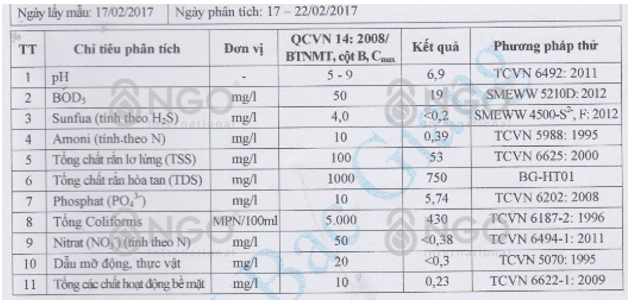
- The legal issue is fully resolved, and the effluent quality is consistently stable within the limits of Column A.
- The system runs automatically and needs just 1 staff member to check it once a day.
Pollutant concentrations of the domestic wastewater source and the water quality achieved and stably maintained after treatment
“NGO International’s MBR-X technology is truly a revolution. It not only solved our problem of limited space but also saved us a considerable amount in operating costs. The consulting and technical team are very professional and reliable.”
– Mr T.M.H, Building Management Director
Video: integrated mobile wastewater treatment module
VII. Frequently asked questions
The initial investment cost of MBR can be higher than conventional technology, but when the total life-cycle cost is counted (construction, operation and maintenance), MBR is an extremely efficient investment thanks to its space savings and low operating costs.
The system suits every source of domestic wastewater, from office buildings, apartment blocks, hotels, resorts and hospitals to the canteens of industrial plants.
Certainly. The effluent quality from an MBR system is very high and can be reused for watering plants, washing roads and flushing toilets, helping businesses save a considerable amount on clean water costs.
With advanced material technology and correct operation and maintenance as recommended by NGO International, the service life of an MBR-X membrane can reach 10 years.
Our system has fully automatic backwashing and chemical clean-in-place (CIP) modes. The operator only needs to perform a few simple steps on the control cabinet. NGO International provides detailed training at handover.
See also:
https://shopngoenvironment.com/product/thiet-bi-mang-loc-e-mbr/
https://shopngoenvironment.com/product/mang-loc-mbr-x/
For detailed advice on wastewater treatment solutions using MBR technology, please contact us on +84 24 7300 0890 or email office@8ngo.com.

Talk to an NGO engineer
Free survey and consultation. Send us your wastewater type (industrial or domestic), flow rate (m³/day), influent analysis results if available and required effluent quality; an NGO engineer will propose a suitable technology and a realistic quotation.
Offices in Hanoi and Ho Chi Minh City · +84 24 7300 0890 · office@8ngo.com
This website is copyrighted by NGO International Co., Ltd (NGO International). Any use or reproduction of part or all of its content in any form is strictly prohibited without our express written permission.
See also: Industrial Wastewater Treatment — NGO Environment’s comprehensive solutions.
See also: MBR Membrane Technology — The Foundation of the MBRX System