Tiếng Việt
 中文 (中国)


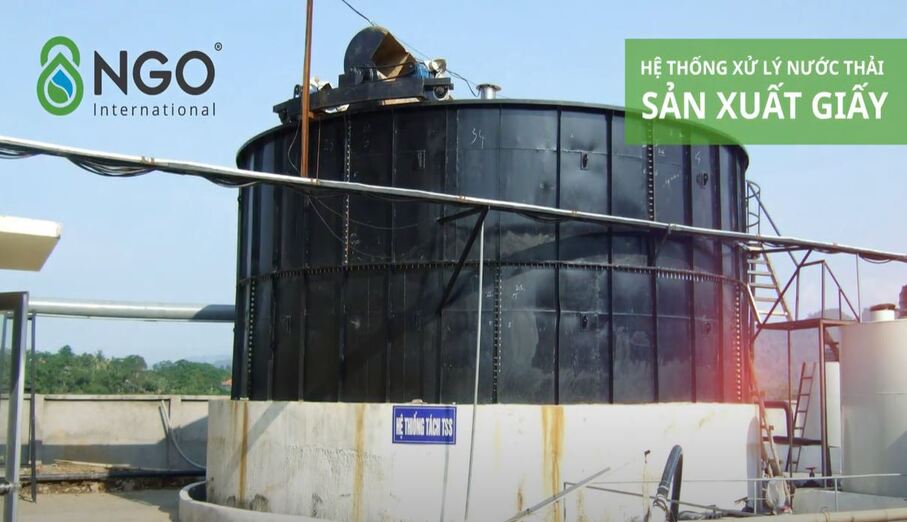
Compared with many other manufacturing industries, the paper industry — including printing and writing paper, packaging paper, wrapping paper, joss paper and more — has a high level of pollution and a large discharge volume, and it seriously affects people and the surrounding environment if the pollution from its wastewater is not treated.
In addition, treating the high pollution load in paper production wastewater so that it meets a company’s needs for treatment or water reuse is a headache for many business owners.
Unlike simple wastewater such as domestic or municipal wastewater, environmental consultants who do not understand paper industry wastewater treatment and the specifics of paper production, or who have never worked on paper mill wastewater, usually cannot provide a suitable solution for this sector.
1. Characteristics of the discharge sources in the production process
| No. | Wastewater stream | Pollution characteristics |
|---|---|---|
| 1 | From pulping (cooking) and washing after cooking | Contains most of the dissolved organic matter, cooking chemicals and some fibre.
|
| 2 | From bleaching or de-inking | This stage usually applies chemical or semi-chemical methods, producing organic compounds, dissolved lignin and so on, combined with bleaching agents in a toxic form that can bioaccumulate, such as organochlorine compounds. This stream has high BOD5 and COD values, up to 700 mg/l and 2500 mg/l. Suspended solids are many times above the permitted limit. The colour is intense and hard to treat with either biological or chemical methods. |
| 3 | Stream from pulp refining and papermaking | Wastewater at this stage contains coarse debris (such as pieces of adhesive tape), cellulose fibres, suspended pulp, and additives such as rosin, dyes, kaolin, linear starch and buffering agents |
| 4 | Stream from equipment washing, floor washing and runoff | Adds suspended solids and spilled materials that can be removed by screening or settling |
| 5 | Domestic wastewater | Often overlooked and still discharged straight into the drainage system after the septic tank |
Wastewater composition at some paper and pulp mills using wood and waste paper as raw material:

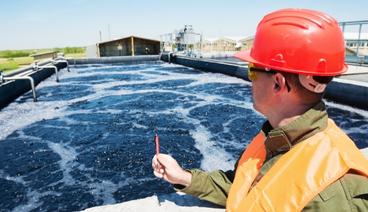
Image of paper production wastewater

2. How is NGO’s paper production wastewater solution different, and what added benefits does it bring to your business?
Recirculate and reuse 100% of the water, with no wastewater discharged
Recover up to 95% of the cellulose fibres in the wastewater and return them to production with good fibre quality
Ability to separate short and long fibres for the company’s production purposes
Exceptionally low chemical use, saving 30% – 50% on chemical costs compared with current technology on the market
The design can be 100% free of biological treatment with a Column A commitment if the company does not want a biological solution, and can run on the hours the company prefers instead of 24/24 h
We build on KROFTA’s practical experience in water treatment at more than 400 paper mills worldwide to provide solutions that suit companies in Vietnam, with a commitment to quality and dedicated service.
3. Featured project

The challenge: A packaging paper mill in Southern Vietnam planned to raise its capacity from 200 to 400 tonnes/day. The existing wastewater treatment system was overloaded, operating costs were high and there was no space left to expand.
NGO International’s solution: We advised replacing the bulky, low-efficiency group of physico-chemical settling tanks with a compact flotation unit. We also installed a pulp recovery system right at the source.
Outstanding results:
The new system neatly treats double the wastewater volume without any additional construction area.
The recovered pulp helps the mill save more than VND 1 billion per year in raw material costs.
Total operating costs (chemicals, electricity, labour) fell by 35% compared with before the upgrade.
Effluent quality consistently meets QCVN 12-MT:2015/BTNMT Column A (the regulation in force when the project was carried out; replaced by QCVN 40:2025/BTNMT from 1 September 2025).
“NGO International’s solution has truly been a revolution for our factory. They not only solved the pollution problem, they also showed us how to turn wastewater into an asset. Professional, dedicated and committed to the end. Very reliable.”
— Mr. T.M.D, General Director of a paper company
Video: Wastewater treatment plant for the paper industry
4. Frequently asked questions
Absolutely. With advanced oxidation and high-efficiency DAF flotation, we can remove COD, SS and colour and commit to effluent that meets QCVN 12 Column A without a biological tank, which suits factories that need flexible operation.
No. Our technology allows long and short fibres to be recovered and separated. The recovered fibre is of good quality and can be returned to suitable production stages, reducing costs without affecting the quality of the finished paper.
Our investment costs are very competitive and reasonable. More importantly, we focus on Total Cost of Ownership (TCO). By saving 30-50% on operating costs and recovering resources, the payback period is much shorter than with older technology.
Depending on the level of treatment, the water can be reused for cleaning the workshop, cooling equipment and watering plants. With higher-level treatment (membrane filtration, demineralisation), the water can be returned to the papermaking stage.
Yes, this is one of our strengths. We specialise in surveying, assessing and proposing plans to renovate and upgrade existing systems that are operating inefficiently, in order to optimise costs and ensure the discharge standard is met.
See more at:
https://shopngoenvironment.com/product/thiet-bi-tuyen-noi-cau-truc-ngang/
https://shopngoenvironment.com/product/thiet-bi-tuyen-noi-sedicell/
https://shopngoenvironment.com/product/thiet-bi-tuyen-noi-supercell/
For advice on wastewater treatment solutions for paper manufacturers, contact us on +84 24 7300 0890, or send an email to office@8ngo.com

Talk to an NGO engineer
Free survey and consultation. Send us your wastewater type (industrial or domestic), flow rate (m³/day), influent analysis results if available and required effluent quality; an NGO engineer will propose a suitable technology and a realistic quotation.
Offices in Hanoi and Ho Chi Minh City · +84 24 7300 0890 · office@8ngo.com
***Please read the Terms of Use – Copyright carefully before copying or quoting any content or images from this website.
This website is copyrighted by NGO International Co., Ltd. Any use or reproduction of part or all of its content in any form is strictly prohibited without our express written permission.