Tiếng Việt
 中文 (中国)
A steel plant can discharge thousands of cubic metres of water a day, but it is not a single waste stream: cooling water, oily rolling water and pickling water have very different characteristics and each needs its own treatment. NGO International Co., Ltd (NGO International), an environmental contractor specialising in industrial wastewater, has implemented a 4,880 m³/day treatment system for a steel manufacturing plant. This article covers the characteristics of steel industry wastewater, NGO’s approach and the points to consider during implementation.
Overview of steel industry wastewater treatment
A steel plant typically has several waste streams with different characteristics. Cooling water for equipment and products makes up most of the flow; it is recirculated and periodically blown down, carrying deposits, salts and cooling water treatment chemicals. The hot rolling area discharges water containing lubricating oil and iron oxide scale. Where there is a pickling or plating stage, the wastewater is acidic and contains dissolved metals.
The difficulty lies in scale and diversity. Large flows require large structures and significant power; mixing different streams together makes every treatment step less effective; iron oxide scale and metal sludge are generated in large quantities and need a receiving facility. Loads also fluctuate with the production plan and the line maintenance schedule.
Design must therefore start from the plant’s own water flow diagram: which streams can be recirculated, which must be treated separately, and which are suitable for reuse. Discharge requirements, the receiving water body and recirculation targets determine the rest.
NGO International’s capabilities in steel industry wastewater treatment
NGO International delivers industrial wastewater treatment systems on a turnkey or partial basis – design, equipment supply, construction and installation, commissioning – with quality records at handover and operation consulting afterwards. In heavy industries such as steel, the main task is to lay out the tank clusters, treatment vessels and process piping for continuous operation and easy maintenance; the 4,880 m³/day system below is a large-scale example.
When a plant’s existing system no longer performs adequately, NGO assesses whether existing structures and equipment can be reused before proposing an upgrade, rather than defaulting to new construction. Our general scope of services is set out on the industrial wastewater treatment page.
Featured projects by NGO International
The plant’s name and location are not disclosed for confidentiality reasons. The video at the top of this article shows an overview of the treatment station, the main treatment units and the treated water pond; the video is part of NGO’s featured projects collection.
4,880 m³/day wastewater treatment system for a steel manufacturing plant
| Industry | Steel manufacturing |
|---|---|
| Capacity | 4,880 m³/day |
| Works | Tank clusters, horizontal cylindrical vessels, process piping |
- The challenge
The plant has a large wastewater flow and needed a treatment system running continuously at a scale of nearly 5,000 m³ per day.
- NGO’s solution
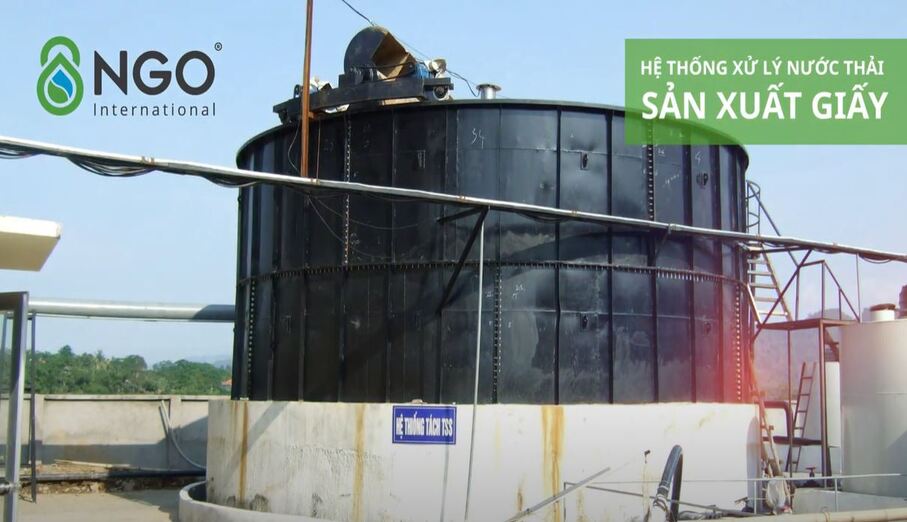
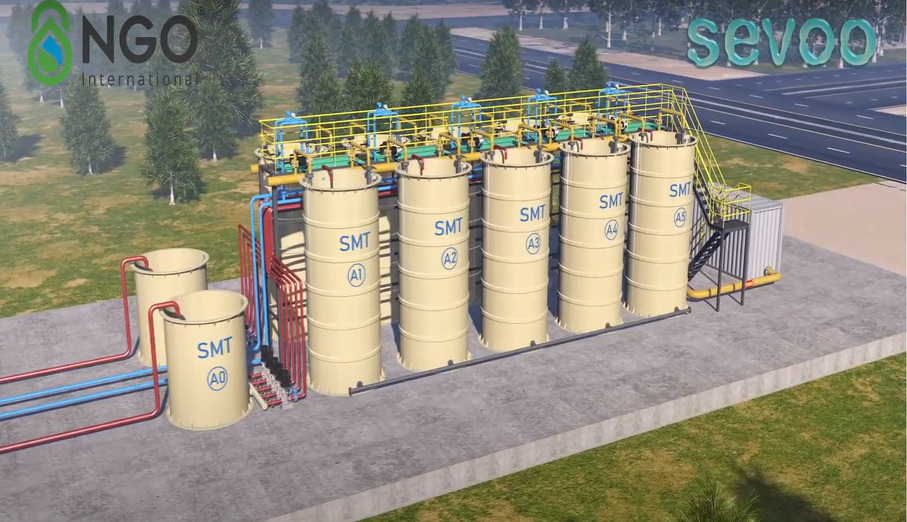
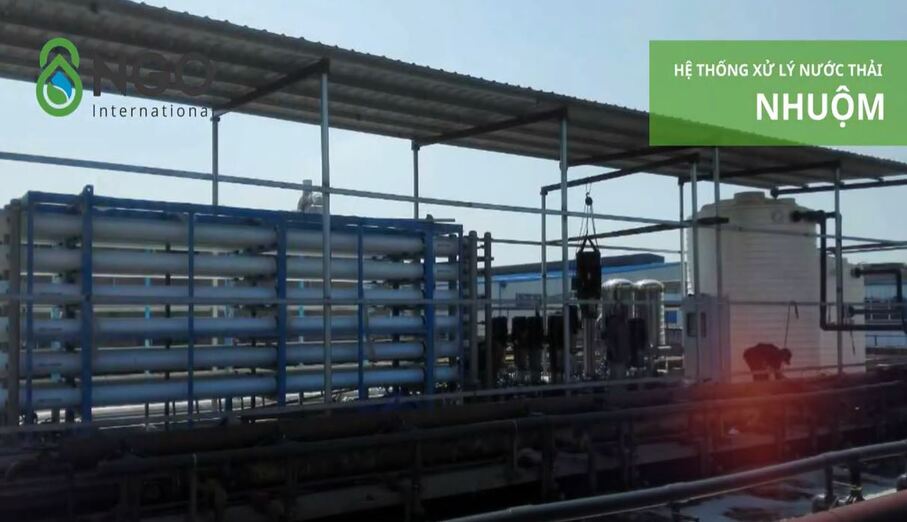
The system consists of treatment tank clusters, horizontal cylindrical vessels and a network of process piping. The process scheme was designed around the characteristics of the plant’s wastewater streams.
- NGO’s role
Within the scope of information that may be disclosed, NGO International implemented the 4,880 m³/day wastewater treatment system for this steel manufacturing plant.
- Results / value delivered
At the end of the treatment line, treated water is discharged into a holding pond where fish live, a visual indicator of water quality alongside monitoring results.
Wastewater treatment technologies commonly used in the steel industry
For recirculating cooling water, the main task is to control deposits, salts and microbial growth: recirculation filtration, softening or controlled blowdown keep water quality stable while reducing the amount of make-up water.
For water containing oil and iron oxide scale from the rolling area, the scheme typically includes a scale settling tank and an oil separator, followed by coagulation–flocculation and settling or flotation. Iron oxide scale settles quickly, while emulsified oil requires demulsifying chemicals.
Acidic pickling or plating wastewater containing dissolved metals needs neutralisation, precipitation of the metals as hydroxides, then settling and filtration. Biological treatment is needed for streams with significant organics or ammonium, such as domestic wastewater or coking wastewater if the plant has a coke oven; when stable treated water is needed for reuse, this stage can use an MBR membrane. Sludge from these steps is dewatered and sorted before being transferred in accordance with regulations.
Steel industry wastewater treatment in Vietnam
Steel plants are usually located in industrial parks near seaports or raw material sources, which have their own connection rules and discharge limits. Plants discharging directly into rivers, canals or other receiving water bodies apply QCVN 40:2025/BTNMT, the regulation that replaced the steel industry’s dedicated regulation (QCVN 52:2017/BTNMT) from 1 September 2025, together with the conditions in their environmental permit.
The water supply source determines a sensible level of recirculation. Where groundwater is limited or water prices are high, recirculating cooling water and reusing treated water for processes with low water quality requirements significantly reduces make-up water. For large-scale projects, surveying, sampling the waste streams and supervising construction require a technical team that is regularly present at the plant.
For steel and metallurgical plants, NGO International takes on both new design and upgrades of wastewater treatment systems in the heavy-industry localities below: Hai Phong and Quang Ninh in Northern Vietnam, Nghi Son Economic Zone in Thanh Hoa, and the Phu My steel cluster in Ba Ria – Vung Tau.
Where we work: steel industry wastewater treatment
Northern Vietnam: Hai Phong, Quang Ninh
Central Vietnam: Thanh Hoa
Southern Vietnam: Ba Ria – Vung Tau (now part of Ho Chi Minh City)
Why choose a contractor with hands-on experience?
In the steel industry, wastewater leaves little room for error: large flows mean every design mistake is multiplied into power, chemical and sludge costs. Owners should ask contractors to present projects of comparable scale they have completed, state whether the plant’s water flow diagram was drawn from measurements or from estimates, and explain their approach to recirculating cooling water.
An equipment layout that allows easy access for maintenance and the plan for metal sludge should also be reviewed from the design documents stage. In the dusty, hot and vibrating environment of a steel plant, hard-to-reach equipment is usually the first to be left without maintenance.
Frequently asked questions
NGO International has implemented a 4,880 m³/day wastewater treatment system for a steel manufacturing plant, comprising tank clusters, treatment vessels and process piping laid out within the plant site.
Typically cooling water (most of the flow), rolling water containing oil and iron oxide scale, pickling or plating water if any, and domestic wastewater. Each stream needs its own treatment.
Scale settling, oil separation, coagulation and settling or flotation, neutralisation and metal precipitation, filtration; biological treatment when organics are significant.
QCVN 40:2025/BTNMT, effective from 1 September 2025, which replaced the steel industry’s dedicated QCVN 52:2017/BTNMT. Plants that had an approved EIA or an environmental permit before this date may continue to apply the old regulation until the end of 2031; plants in industrial parks must also meet the park’s connection limits.
Hai Phong and Quang Ninh in Northern Vietnam, Thanh Hoa in Central Vietnam and Ba Ria – Vung Tau (now part of Ho Chi Minh City) in Southern Vietnam are the areas where NGO takes on steel plant wastewater treatment projects.
Yes, and this is common practice. Filtration, control of deposits, salts and microbial growth, and controlled blowdown are needed to maintain water quality.
Yes. NGO assesses whether existing structures and equipment can be reused, then proposes the upgrade, designs it, supplies equipment, carries out construction and commissions the system until it meets requirements.
Yes, for processes with low requirements such as cooling water make-up, washing or dust suppression, after filtration and control of salts and deposits. The level of reuse depends on the water quality each process requires.
Conclusion
For steel plant wastewater, the two deciding factors are scale and stream segregation: large flows, each stream with its own characteristics, and metal sludge that needs a receiving facility. A good solution starts from the plant’s water flow diagram, not from an equipment list, because in this industry design errors multiply very quickly.
NGO International has implemented a 4,880 m³/day wastewater treatment system for a steel manufacturing plant and takes on both new designs and upgrades of existing systems. For plants that need to assess their current system or are preparing a new investment, the first step should be to map the plant’s water flows; NGO’s technical team can survey the site and do this together with the plant.
Contact NGO International