Tiếng Việt
 中文 (中国)


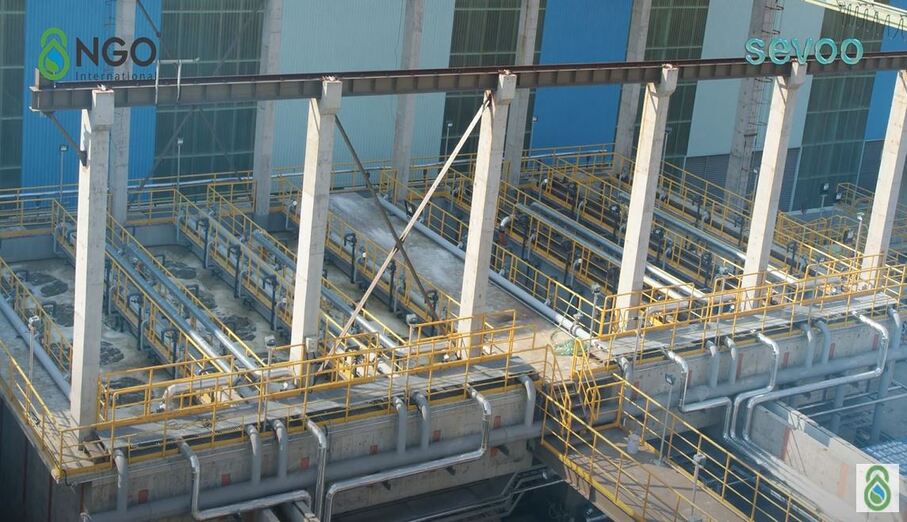
Cooling systems (cooling towers) are the heart of countless industrial processes, from power plants, metallurgy and plastics to commercial centre buildings. But there is a truth that many operations managers face every day: energy costs keep rising, equipment breaks down frequently, and cooling performance falls short of requirements. The source of these “pain points” often comes from a silent but extremely important factor: the quality of the water fed to the cooling system.
If not treated properly, water becomes enemy number one, causing scale, corrosion and microbial growth, which erode profits and threaten the stability of your production. At NGO International, with nearly 10 years of experience, we do not just provide a solution; we bring peace of mind and lasting efficiency.
1. Overview of cooling systems
A cooling system is a device, or a system of several devices, used to lower the temperature of a water stream by extracting heat from the water and releasing it into the atmosphere. Today, cooling towers are used in many different manufacturing sectors such as:
- Refrigeration and air conditioning: manufacturing air conditioners, making ice cubes,…
- Seafood processing
- Plastics: supporting plastic injection moulding and plastic packaging.
- Pharmaceuticals: keeping pharmaceutical products at a suitable temperature.
- Metallurgy: cooling steel and aluminium products…
- Other sectors: electric cables, beer and liquor production, wastewater treatment…
1.1 Common cooling systems today

Once-through cooling system (One-through system)
The water source for this type of cooling tower usually comes from places with abundant and cheap reserves such as rivers and streams, with a low inlet water temperature. The inlet water usually has to be treated to prevent scale and microorganisms.

Open recirculating cooling system (Open recirculating system)
This is the most widely used type of cooling tower in industry. In this method, the circulating water is lost through evaporation and is continuously replenished with an equivalent amount, so the water quality changes constantly. In addition, because air flows through the tower, the water easily absorbs oxygen and picks up dust and dirt.

Closed cooling system (Closed circulating system)
In a closed circulating system there is very little or no water loss (meaning there is always a fixed amount of water in the pipes). Make-up water (if any, very little) is added to keep the system full. In addition, in a closed circulating system the water is always under pressure, so excess air can be removed through automatic vent devices.
1.2 Key parameters of cooling water.
Summary of key cooling water parameters
| Parameter | Definition / Description | Effects / Impact | Target / Notes |
|---|---|---|---|
| Conductivity & total dissolved solids (TDS) | Conductivity: A measure of the water’s ability to conduct electricity. TDS: The amount of dissolved solids. The two indicators are correlated. | – High TDS readily forms scale on heat transfer surfaces. – Scale reduces heat transfer efficiency and affects water pressure. | – Minimise scale formation. – Use conductivity as the control value. |
| pH | A measure of the acidity / alkalinity of water (scale of 0-14, 7 is neutral). | – Low pH (acidic): Increases the potential for system corrosion. – High pH (alkaline): Increases the potential for scaling. | Controlling pH is very important. |
| Hardness | The amount of dissolved calcium (Ca++) and magnesium (Mg++) in the water. | The main cause of calcium carbonate scale deposits in pipes and equipment. | Needs to be controlled to limit scale formation. |
| Alkalinity | – | – | – |
| Saturation index (LSI) | Langelier Saturation Index (LSI), a measure of water stability. | – LSI > 0 (positive): The water tends to form scale. – LSI < 0 (negative): The water tends to cause corrosion. | The stable value is from 0 to +1.0. |
Summary of common problems in cooling systems
| Location in the system | Problem | Cause | Consequence |
|---|---|---|---|
| Condenser | Scale formation | High temperature (40-42°C) makes the Ca++ and Mg++ ions in hard water precipitate easily. | – Reduced heat transfer coefficient. – Increased pipe resistance. – Reduced system efficiency. |
| Cooling Tower | Growth of weeds, algae and bacteria | Warm water creates a favourable environment for microorganisms. | – Contaminates the water source. – Reduces system capacity. |
2. Wastewater treatment for cooling systems

2.1 Purposes of water treatment for cooling towers
- Remove coarse debris that can clog the cooling system, such as vegetation and trash…
- Remove suspended solids from the water to prevent the formation and accumulation of deposits that would adversely affect heat transfer efficiency and may cause corrosion. In addition, large deposit build-up can clog the cooling system
- Remove excess carbon dioxide and metals present in the water such as iron and manganese
- Inhibit the growth of microorganisms on heat exchange surfaces
- Eliminate the potential for cooling tower corrosion caused by dissolved oxygen, dissolved salts, alkalinity or microbial growth
2.2 Current water treatment for cooling towers
To treat the inlet water for the cooling system and avoid the risk of pipe and equipment blockage caused by scale and algae, there are several treatment methods:
- Treat the inlet water by methods such as water softening, dealkalisation and ion exchange to remove the scale-forming minerals in the supply water;
- Lower the pH – the potential for scale formation is reduced in an acidic environment, i.e. at low pH;
- Chemical dosing – adding scale inhibitors and conditioners to the circulating water;
- Control the concentration process – i.e. limit the concentration of scale-forming minerals. This is done by blowdown, periodic or continuous, i.e. deliberately discharging part of the water to prevent the minerals from accumulating;
- Physical water treatment – filtration, descaling.
2.3 Water treatment with filtration equipment supplied by NGO.
In its water treatment solutions, NGO always tries NOT TO USE chemicals, to avoid secondary pollution and to reduce clients’ operating costs. The solutions are highly precise and varied, from coarse filtration and fine filtration to water reuse for producing goods that demand high water quality. Water softening, rust and corrosion prevention and microorganism removal are achieved by electrolysis. These solutions are also applied effectively to treat water for central air-conditioning systems and boiler systems.


3. Featured project
- Challenge: A large seafood processing plant constantly faced high electricity bills, and its cooling system had to be shut down every 3 months to clean off scale, disrupting its production plans.
- NGO International’s solution: After surveying and analysis, we deployed a system combining inlet water softening with chemical-free electrolysis technology to control scale.
- Impressive results:
- 18% reduction in energy costs for the chiller system.
- Cleaning cycle extended from 3 months to 12 months, cutting costs and downtime by 75%.
- More than 30% savings in blowdown water.
- Investment paid back after only 16 months.
“Since installing NGO International’s water treatment system, we have genuinely breathed a sigh of relief. Cooling performance is stable, electricity costs have dropped noticeably, and my technical team no longer has to scrape off scale every quarter. A thoroughly worthwhile investment decision.”
– Mr. T.V.N, Head of the Technical Department
4. Frequently asked questions.
LSI predicts the tendency of the water: scale formation (LSI > 0) or corrosion (LSI < 0). Our goal is to keep LSI near neutral (0 to +1.0) to protect the system.
Chemical-free solutions reduce the cost of purchasing and storing chemicals, are safe for operators, are environmentally friendly (discharged water contains no hazardous chemicals), and reduce the risk of chemical-induced corrosion.
The cost depends on the scale, the capacity of the cooling system and the inlet water quality. Contact us for a quotation and a detailed return-on-investment (ROI) analysis.
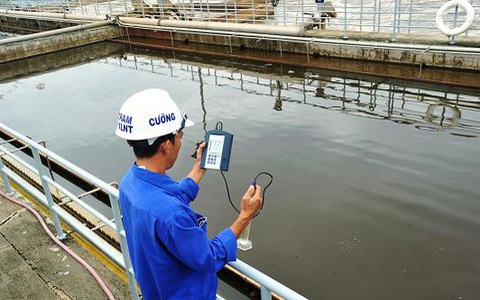
We recommend checking the basic parameters weekly and carrying out a comprehensive analysis monthly or quarterly. NGO International’s service package already includes these activities.
Absolutely. All our solutions are designed to ensure that the treated water quality complies with the current national technical regulations.
See more at:
https://ngoenvironment.com/en/supply-water-treatment.html
Clients interested in wastewater treatment solutions for cooling systems are welcome to contact NGO by phone at +84 24 7300 0890 or by email at office@8ngo.com for direct consultation.

Talk to an NGO engineer
Free survey and consultation. Send us your raw water source (with analysis results if available), capacity and the required treated-water quality; an NGO engineer will propose a suitable system and a realistic quotation.
Offices in Hanoi and Ho Chi Minh City · +84 24 7300 0890 · office@8ngo.com
***Please read the Terms of Use – Copyright carefully before copying or quoting any content or images from this website.
This website is copyrighted by NGO International Co., Ltd. Any use or reproduction of part or all of its content in any form is strictly prohibited without our express written permission.