Tiếng Việt
 中文 (中国)


1. Operating principle of MBR membrane wastewater treatment technology
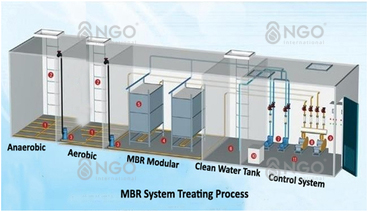
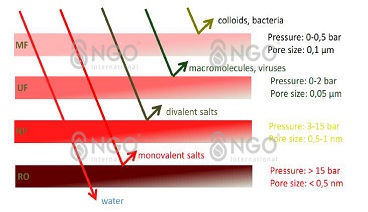
MBR is an advanced wastewater treatment technology that uses a biological process combined with biomass separation using MF/UF membranes with a pore size of 0.1-0.4μm.
The biological treatment can combine anaerobic, anoxic and aerobic stages (AAO/AO), depending on the treatment requirements or on thorough removal of organic matter through the two nutrients (N, P).

2. Advantages of MBR membrane wastewater treatment technology
- MBR works with a long sludge retention time, high MLSS concentration and low F/M ratio.
- Treated water quality does not depend on the settleability of the sludge.
- MBR achieves higher nitrification than the conventional activated sludge process because the bacteria have more time to carry out nitrification (long SRT, low F/M).
- The sludge flocs in MBR are small, allowing greater exchange of nutrients and oxygen.
- The presence of the MBR membrane prevents nitrifying microorganisms from being washed out when SRT and HRT are short.
- MBR produces little sludge.
- The MBR process can handle a higher pollutant load (2.5-3 times that of CAS).
- Reduces the treatment area of the whole system by up to 50% compared with the conventional process.
- Eliminates many treatment steps of CAS technology, such as secondary settling, sludge collection or other measures to remove BOD and SS.
- High microbial removal efficiency, minimising the risk of contamination, with no disinfection chemicals used.
- Lower energy consumption.
- Effluent quality meets Standard A and can be reused for many purposes such as aquaculture and floor washing…
- The MBR membrane has clear advantages over other technologies in terms of treatment footprint.

3. Disadvantages of MBR membrane wastewater treatment technology
- Higher initial investment and operating costs. Poor membrane quality can cause membrane clogging.
- Membrane cleaning makes operation more complex and requires skilled operators if no automatic cleaning step is used (whether by air scouring or by liquid chemicals).
Read more
MBR membrane technology: https://ngoenvironment.com/en/tin-tuc-n5-wastewater-treatment-technologies-differences-between-membrane-types-d53.html
Businesses interested in wastewater treatment solutions using MBR membranes are welcome to contact NGO on +84 24 7300 0890 or by email office@8ngo.com for direct consultation.

Talk to an NGO engineer
Free survey and consultation. Send us your wastewater type (industrial or domestic), flow rate (m³/day), influent analysis results if available and required effluent quality; an NGO engineer will propose a suitable technology and a realistic quotation.
Offices in Hanoi and Ho Chi Minh City · +84 24 7300 0890 · office@8ngo.com
This website is copyrighted by NGO International Co., Ltd (NGO International). Any use or reproduction of part or all of its content in any form is strictly prohibited without our express written permission.
See also: Industrial Wastewater Treatment — NGO Environment’s comprehensive solutions.
See also: A-standard domestic wastewater treatment system — applying MBR technology