Tiếng Việt
 中文 (中国)
For a paper mill, wastewater is both an environmental burden and a stream of lost raw material: the fibre and pulp carried away with the water is money. NGO International Co., Ltd (NGO International) designs and builds industrial wastewater treatment systems and approaches paper industry wastewater with three treatment stages, the first of which uses ultra-high-rate DAF flotation to recover pulp before COD and colour are treated. This article presents the approach through a system NGO has delivered for a paper mill.
Overview of paper industry wastewater treatment
Paper mill wastewater contains fibre, fine pulp, kaolin, starch and papermaking additives. Mills using recovered paper also have printing ink, glue and adhesive tape in their wastewater; mills making pulp from wood or bamboo have black liquor, lignin and high colour from the cooking and bleaching stages. Every mill uses a large volume of water for each tonne of paper.
Suspended solids are very high, and most of them are valuable fibre and pulp; letting them flow down to the treatment system both creates a heavy load and wastes raw material. The second problem appears when the mill closes its water loop to save water: hardness, salts, dissolved organics and microorganisms gradually build up, causing scaling and odour and affecting paper quality.
The technology is selected according to the paper grade and raw material, the capacity in tonnes of paper per day, the desired recirculation rate, the available land and the discharge requirements. The composition of the incoming recovered paper alone can make COD and impurity levels vary considerably from one raw material batch to the next.
NGO International’s capabilities in paper industry wastewater treatment
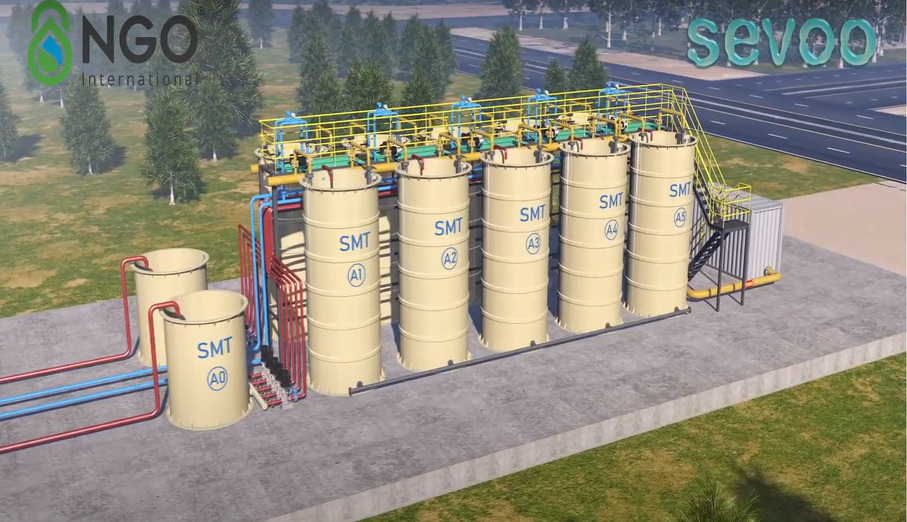
NGO International’s approach to paper wastewater is to recover pulp and fibre right at the source, both reducing the load on the downstream stages and returning raw material to production. The solution consists of three treatment stages; the solids separation stage uses an ultra-high-rate DAF unit designed for wastewater with high suspended solids concentrations.
The solution is designed to recover pulp and separate fibre at rates of up to 93%, treat COD and colour so that the treated water meets Column A standards, and allow up to 95% of the water to be recirculated to production. Actual figures at each mill also depend on the raw material and the way the system is operated, so they need to be measured once the system is running stably. For systems already in operation, NGO’s operation consulting service reviews chemical consumption and operating parameters; our general scope is described on the industrial wastewater treatment page.
NGO International’s featured projects
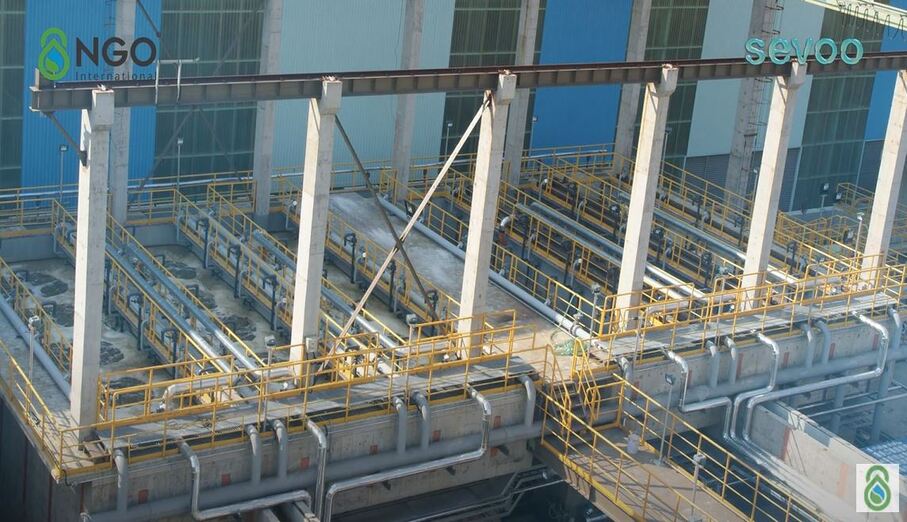
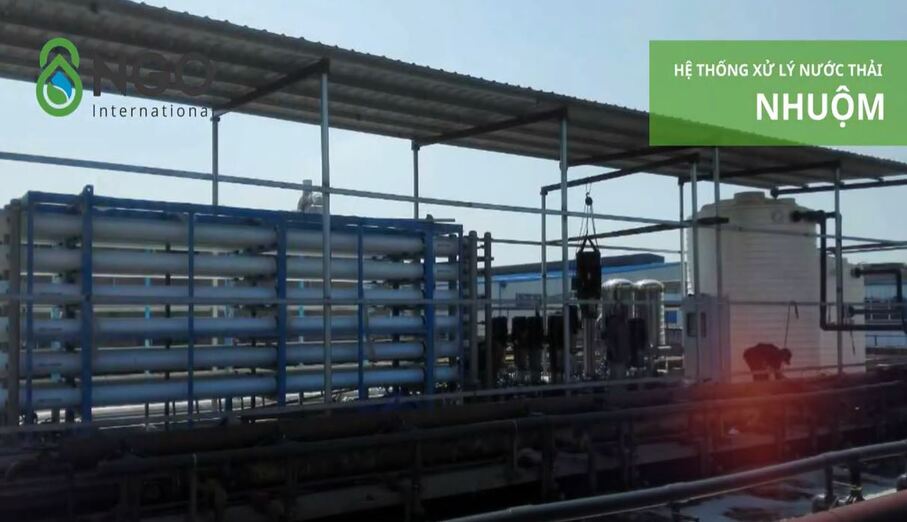
The name and location of the mill are not disclosed. The video at the top of this article shows the treatment tanks, the DAF unit and water samples before and after treatment; the video is part of the portfolio on the Projects page.
Paper mill wastewater treatment system with three treatment stages and ultra-high-rate DAF
| Industry | Paper production |
|---|---|
| Treatment stages | 3 stages |
| Solids separation | Ultra-high-rate DAF, micro-bubbles |
| Pulp and fibre recovery | Up to 93% (design value) |
- The challenge
The wastewater has a high suspended solids concentration and carries valuable pulp and fibre. The mill needed both to recover the raw material and to bring the water to discharge or recirculation quality.
- NGO’s solution
The ultra-high-rate DAF unit treats the high-TSS stream: micro-sized air bubbles attach to the solids and carry them to the water surface in less than a minute. The recovered pulp is adjusted in consistency for return to production; the water continues through the COD and colour treatment stages.
- NGO’s role
Delivered the three-stage wastewater treatment system for this paper mill, including the ultra-high-rate DAF solids separation unit.
- Results / value delivered
According to the design values of the solution, pulp and fibre are recovered at up to 93% for return to production, and the treated water meets Column A standards and can be recirculated at up to 95%. In the video, the treated water sample is visibly clearer than the incoming wastewater.
Wastewater treatment technologies commonly used in the paper industry
The first step is to remove coarse debris and large fibres with screens or sieves, after which DAF recovers fibre and fine pulp for return to the production line. The coagulant aids must be chosen so that they do not affect paper quality when the pulp goes back into production.
Dissolved COD is treated biologically. For high-COD recycled paper wastewater, anaerobic treatment (UASB, IC) ahead of the aerobic stage sharply reduces the load and produces biogas; the remainder is treated aerobically. If colour is still high, physico-chemical coagulation or advanced oxidation can be added.
Deeper water recirculation requires filtration and control of hardness, salts and microorganisms in the water loop; otherwise scaling and odour will appear. The feasible recirculation rate is always a balance between paper quality, treatment cost and the water supply source.
Paper industry wastewater treatment in Vietnam
Many paper mills in Vietnam, especially packaging paper mills, use recovered paper as raw material, so their wastewater contains a lot of ink, glue and impurities; mills making pulp from wood or bamboo also have black liquor and bleaching effluent. This difference in raw material determines the treatment scheme.
The two location-related factors with the greatest influence are the receiving water body, which determines the final treatment level, and the water supply source, which determines the feasible recirculation rate. If the mill is located in an industrial park, the park’s centralised wastewater treatment plant also sets its own connection limits.
NGO International’s engineering team works with paper and pulp mills in the provinces below, from wastewater stream surveys and pulp recovery to upgrading systems already in operation. Bac Ninh has many recycled paper facilities around its craft villages, while the former Binh Duong province and Dong Nai are home to packaging paper mills serving the industrial parks of Southern Vietnam.
Where we work: paper industry wastewater treatment
Northern Vietnam: Bac Ninh
Southern Vietnam: Binh Duong (now part of Ho Chi Minh City), Dong Nai
Why choose a contractor with real-world experience?
Contractors who have never worked on paper wastewater often treat it like ordinary industrial wastewater and miss two things: the value of the fibre that can be recovered and the effect of the recirculated water loop on paper quality. A credible proposal should state clearly which paper grades it has been designed for, the recovery rates measured at systems already in operation, and how the water loop is controlled.
It is also worth checking how capacity is calculated per tonne of paper, the ability to expand when the mill increases output, and the support available when the raw material changes. The supply of recovered paper changes with the market, and the wastewater changes with the raw material.
Frequently asked questions
NGO International has delivered a three-stage wastewater treatment system for a paper mill, with an ultra-high-rate DAF unit that recovers pulp and fibre ahead of the COD and colour treatment stages.
It typically includes debris and fibre removal, DAF for pulp recovery, biological treatment (anaerobic followed by aerobic for high-COD wastewater), physico-chemical treatment for colour, and filtration when the water is recirculated.
It rapidly separates suspended solids such as fibre and pulp from high-TSS wastewater using micro-bubbles; the recovered material can be returned to production.
NGO’s solution is designed to recover pulp and separate fibre at rates of up to 93%; actual figures depend on the raw material and the way the system is operated.
Up to 95% can be recirculated to production when the treated water meets Column A standards. The feasible rate depends on the paper grade, the required water quality and how the water loop is controlled.
In Bac Ninh in Northern Vietnam, and in Binh Duong (now part of Ho Chi Minh City) and Dong Nai in Southern Vietnam; NGO takes on both new systems and upgrades of systems already in operation.
Yes, provided the coagulant aid used in the DAF step does not affect paper quality. In NGO’s solution, the consistency of the recovered pulp can be adjusted for return to the production line.
Yes. When the water loop is closed, hardness, salts, dissolved organics and microorganisms build up, causing scaling and odour and affecting paper quality. These parameters therefore need to be filtered and controlled within the water loop itself.
Conclusion
In a paper mill, a good treatment system is one that recovers pulp first and only then treats the water, with controlled water recirculation. The investment cost only makes sense when set against the pulp, fibre and supply water the mill is able to retain, and those figures need to be measured on a real system.
NGO International has delivered a three-stage system with ultra-high-rate DAF for a paper mill, backed by design, construction and operation consulting capabilities. Mills looking to recover pulp or increase water recirculation should start by measuring their current pulp losses; NGO can support these measurements before a solution is chosen.
Contact NGO International